
Get rid of burning feet and hot spots in cycling: causes, cleat adjustment tips, and how carbon insoles help.
Hot Spots in Cycling: Causes and Solutions for Burning Feet
Every ambitious cyclist knows the feeling: you're in the middle of a hard interval training session or on an extended ascent, and suddenly it starts. First a slight tingling, then an uncomfortable pressure, and finally a sharp, burning pain in the balls of your feet. These so-called hot spots in cycling are not only extremely painful but can completely ruin your performance. When your feet "catch fire," concentration drops, pedaling technique suffers, and in the worst case, the ride has to be abandoned. But why do these discomforts arise in the first place, and what can be done effectively to combat them?
In this comprehensive guide, you will learn everything about the anatomical background of hot spots, why conventional cycling shoes are often part of the problem, and how you can painlessly increase your performance through targeted measures and the expertise of WINSOLE. Our goal is to show you how to prevent hot spots in cycling preventively and solve existing problems permanently.

What exactly are hot spots in cycling?
The term "hot spots" describes a localized overstimulation of nerves in the forefoot area, usually between the metatarsal heads. Since cyclists transmit their power over a relatively small area (the pedal plate), enormous localized pressure is created here. Unlike running, where the foot rolls off and thus experiences natural relief, the foot in cycling remains in a static position within an often tight, stiff shoe.
This constant pressure leads to a compression of the fine nerve pathways and blood vessels. The consequence: numbness, tingling, and the characteristic burning sensation. In medicine, this is often referred to as metatarsalgia or, if the nerves are already chronically irritated, Morton's neuroma. To solve these problems sustainably, we must delve deep into the biomechanics of cycling.
The main causes of burning feet on a road bike
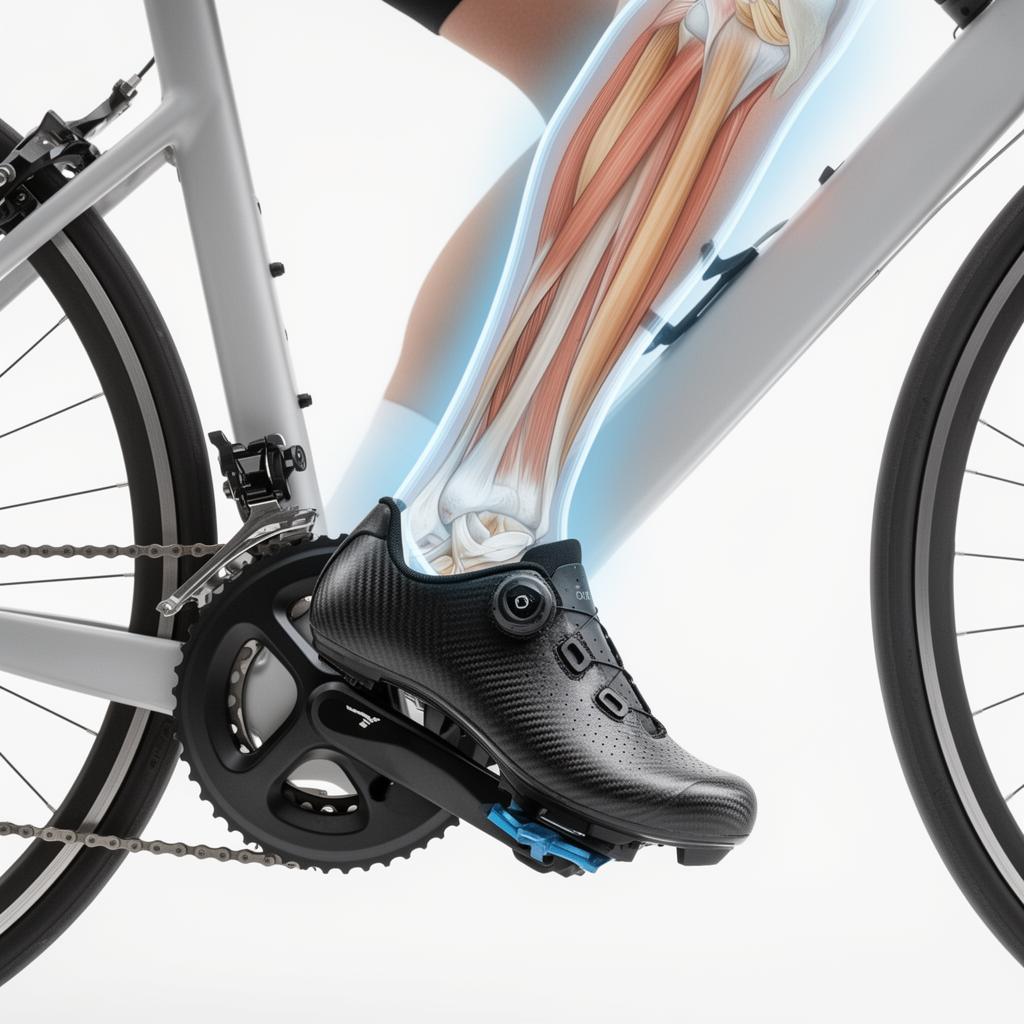
To effectively combat hot spots in cycling, we need to understand the causes. Most often, it is not a single factor, but a combination of equipment, anatomy, and riding style.
1. Too tight or too soft cycling shoes
Many cyclists tend to buy their shoes too tight or to tighten the fasteners (Boa, ratchets) too much. During a long ride, the foot swells slightly due to increased blood circulation. A shoe that fit perfectly in the store becomes a vice after two hours of riding. At the same time, a too soft sole does not provide enough stability, causing the pedal plate to literally "press through" into the foot.
2. Incorrect Cleat Positioning
The position of the pedal plates (cleats) is crucial. If they are too far forward towards the toes, the lever arm increases and the load on the calf muscles and the delicate structures of the forefoot rises massively. A professional bike fitting is often the first step to improvement here.
3. Lack of arch support
This is the most common cause of hot spots. Most standard insoles in cycling shoes are thin foam inserts with no significant support function. When the foot "collapses" under load (pronation), the metatarsal bones are spread apart or shifted against each other. This pinches the nerves located between them.
"A stable foot is the foundation of every power transfer. Without the right support, valuable energy is lost and pain is pre-programmed." – WINSOLE Expert Team
The biomechanics of the foot under maximum load
To understand why hot spots in cycling are so persistent, one must consider the peak loads. During a powerful acceleration, forces can act on the pedal that are far above body weight. Because the foot is fixed in the shoe, it cannot dissipate the pressure like it does through the heel when walking. The entire pressure constantly rests on the forefoot area. Without transverse and longitudinal arch support, the foot flattens, which enhances the so-called splayfoot effect. This in turn leads to the compression of capillaries, which restricts the oxygen supply to the nerve endings.

The solution: Why carbon insoles make the difference
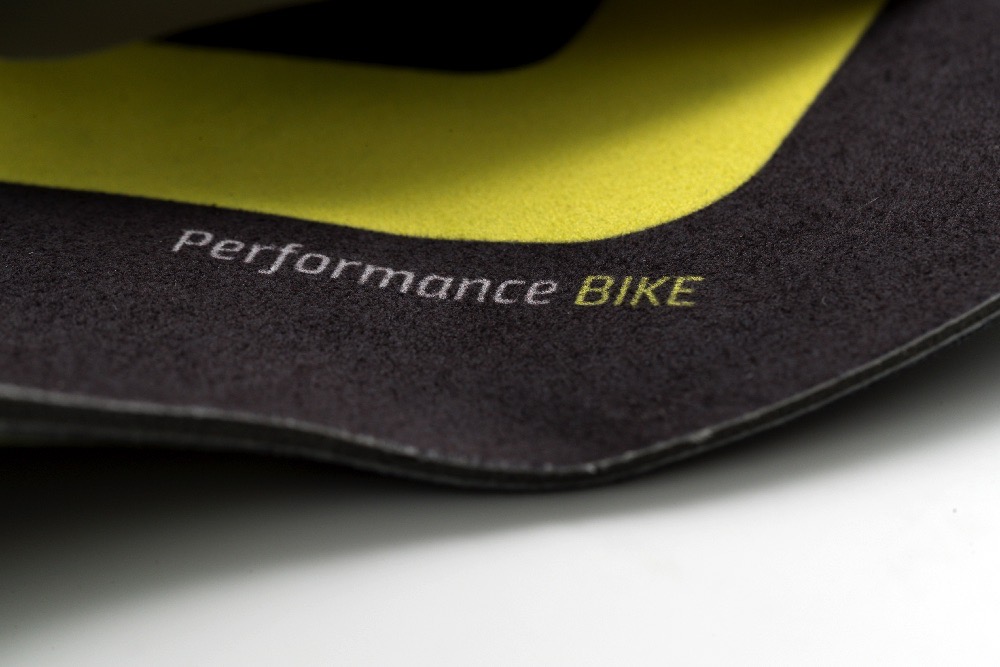
If stretching and loosening shoes no longer help, it's time for a professional solution. This is where WINSOLE's principle of action comes in. As a specialist in carbon insoles, we combine over 25 years of expertise in foot biomechanics with state-of-the-art manufacturing technology "Handmade in Germany".
Maximum pressure distribution through carbon
Our WINSOLE Performance insoles feature a specially shaped carbon core. Carbon offers the unique property of being extremely stiff and thin at the same time. This distributes the localized pressure of the pedal plate over the entire foot surface. The dreaded pressure points on the metatarsal heads are eliminated.
Stabilization of the arch
Individual support of the longitudinal and transverse arches prevents the foot from sinking into the shoe. The bones remain in their natural alignment, the nerve pathways have space, and blood circulation is not impeded. The result: no more burning feet, even on rides over five hours.
Step-by-step: How to conquer hot spots
If you are currently suffering from burning feet, we recommend the following procedure:
- Shoe Checkup: Do your toes have enough space? Try thinner socks or occasionally loosen the fasteners during your ride.
- Cleat Adjustment: As a test, slide the cleats 3-5 mm further back towards the heel to relieve pressure on the forefoot.
- Insole Upgrade: Replace the standard insoles with high-quality cycling insoles from our product range. For maximum comfort, the WINSOLE Comfort series offers excellent cushioning.
- Professional Analysis: For chronic complaints, a customized insole is the premium solution. Your foot will be digitally measured for this.
Long-term prevention through targeted training
In addition to equipment, musculature also plays a role. Weak foot muscles are more prone to arch collapse. We recommend that cyclists regularly incorporate foot exercises into their daily routine. Grasping exercises with the toes or balancing on unstable surfaces strengthen the intrinsic foot muscles. This supports the effect of WINSOLE insoles and ensures that hot spots in cycling are no longer an issue even on long stages.
Why Professionals Trust WINSOLE
In professional sports, nuances often decide between victory and defeat. Our successful athletes like world champion Emma Hinze or mountain bike pro Mona Mitterwallner cannot afford to be limited by foot pain. Power transfer must be lossless.
Our carbon insoles are designed to hold the foot in the optimal position without constricting it. By reducing micromovements in the shoe, muscles tire slower, and you can consistently pedal at higher wattages. The special thing about WINSOLE: We manufacture every insole in our factory in Germany. The feedback from world-class athletes directly influences product development.
Material Science: Carbon vs. Standard Plastic
Why is carbon the material of choice against burning feet? Conventional plastic or EVA foam gives way under the high load of cycling. It "fatigues". A cyclist pedals about 5,000 times per hour. On a four-hour tour, that's 20,000 load cycles. Plastic insoles lose their resilience here. Carbon, however, remains dimensionally stable. It offers the necessary stiffness to actively support the foot without taking up unnecessary volume in the shoe – a crucial factor to avoid shoe claustrophobia and thus hot spots.
Practical Tip: The Right Sock Choice
Never underestimate the sock! Thick cotton socks are out of place in cycling shoes. They retain moisture, increase friction, and thus promote heat buildup. Use special cycling socks made of functional fibers that quickly wick away sweat and have no thick seams in the toe area. In combination with a breathable carbon insole, you create an optimal foot climate.
Connection between Leg Axis and Foot Pain
Often, the causes of hot spots in cycling lie further up the kinetic chain. A misalignment of the knees or instability in the hip can cause the foot to tilt on the pedal. WINSOLE insoles help to stabilize the leg axis. By correctly positioning the foot, the knee is guided in a straight track. This not only reduces the risk of burning feet but also prevents knee problems and tendon irritations.
Conclusion: Pain-free to New Personal Bests
Hot spots in cycling do not have to be tolerated. They are a warning sign from the body that pressure distribution and foot position need to be optimized. With the right choice of shoes, correct cleat positioning, and above all, high-quality foot support through carbon insoles, burning feet can almost always be eliminated.
Invest in your health and performance. A pain-free foot is the prerequisite for you to fully live out your passion for cycling – whether in training, at the next marathon, or in the pursuit of a new personal best. Discover the possibilities of our specialized insoles and declare war on hot spots.
Find the right insole for your setup
Not sure? Start with Comfort or Performance.
You might also be interested in

Find more information on this topic on our special pages: