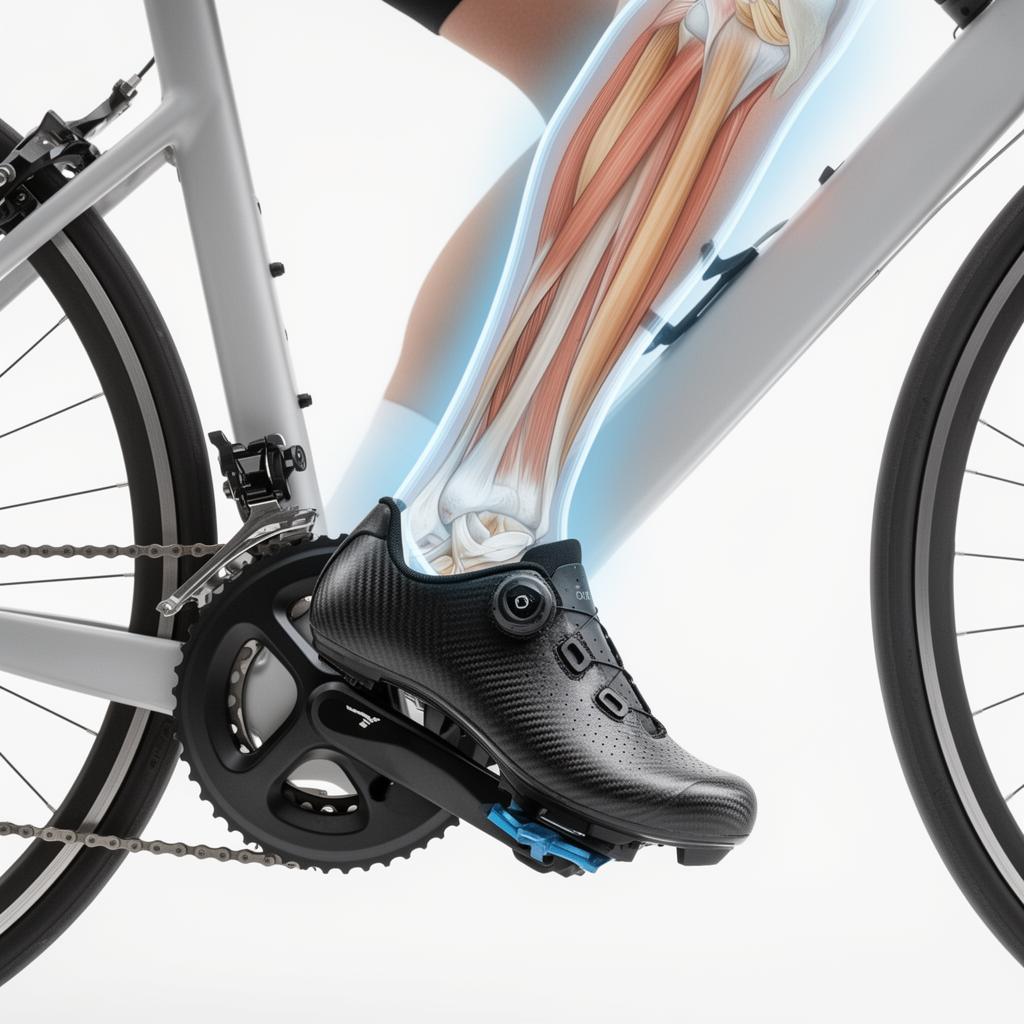
Pulling in the groin while pedalling? Hip flexor pain when cycling usually has its cause in the kinetic chain. Quick relief and lasting solutions for iliopsoas issues.
Hip Flexor Pain When Cycling – Causes, Quick Relief & Lasting Solution
A pulling, sharp or dull pain at the front of the hip – right in the middle of the pedal stroke, often when climbing or after long rides: hip flexor pain when cycling is one of the most common and at the same time most underestimated complaints in endurance sport. It costs watts, it costs kilometres – and it rarely disappears on its own.
In this guide you will learn why the hip flexor becomes overloaded when cycling, what role foot stability, saddle position and the kinetic chain play, what really helps – and where the difference lies between treating the symptom and treating the cause.
What is the hip flexor – and why is it so vulnerable when cycling?
The hip flexor (musculus iliopsoas) is a deep-lying muscle group that connects the pelvis to the thigh. It is responsible for actively lifting the leg and therefore for the upward phase of the pedal stroke. When cycling, it works on every pedal revolution – at 90 rpm that means around 5,400 times per hour.
The typical road-bike riding position is biomechanically particularly demanding for the hip flexor: the upper body is tilted forward, the pelvis is rotated, the hip angle is sometimes below 45°. In this shortened position the muscle has to maintain constant tension – a classic breeding ground for overload.
Typical symptoms at a glance
- Pulling pain in the groin or front hip area
- Discomfort when lifting the leg at the top dead centre
- Increased pain during out-of-saddle riding, sprints or climbs
- Stiffness after long rides, painful standing up from the desk
- Pain radiating into the lower back or knee
The 5 most common causes of hip flexor pain when cycling
1. Unstable foot position – the underestimated foundation
The pedal stroke does not start at the hip, it starts at the foot. If the foot collapses inward in the shoe (pronation) or rolls outward (supination), the entire leg axis is thrown off track. Knee and hip have to compensate – the hip flexor is permanently doing corrective work. Studies from bike fitting practice show that up to 78 % of athletes have relevant foot instability in their cycling shoes without knowing it.
2. Saddle too high or too far back
A saddle set too high forces the pelvis into a rocking motion from left to right – the hip flexor has to absorb this asymmetry. A saddle pushed too far back opens the hip angle too much at the top dead centre and irritates the muscle.
3. Aggressive aerodynamic position
Triathletes and time triallists know the issue: the flatter the upper body, the tighter the hip angle. Anyone who has not adapted to the position over years of training risks chronic iliopsoas overload.
4. Shortening from desk work
Anyone who sits eight hours a day has a shortened hip flexor – before they even get on the bike. The one-sided loading in cycling amplifies the problem.
5. Leg length difference and pelvic tilt
Anatomical or functional leg length differences over 5 mm lead to asymmetric loading of the hip flexor. Without height compensation in the shoe, the weaker side is chronically overworked.
Quick relief: what you can do after the ride
- Active mobilisation: lunges with forward pelvic tilt, 2 × 30 seconds per side
- Fascia work: careful foam rolling of the front thigh
- Cool, don't warm: in case of acute irritation cool for 10 minutes, then stretch gently
- Reduce load: adjust watts, cadence and riding position for 5–7 days
- Strengthen the antagonists: targeted training of glutes and core stability
The lasting solution: addressing the cause
Stretching symptoms, taking pills, taking a break – that helps in the short term. Anyone who wants to get rid of hip flexor pain permanently has to stabilise the kinetic chain from the bottom up.
Step 1: Check foot stability in the cycling shoe
Most cycling shoes are ergonomically high quality – but the supplied insoles are almost always flat and unstable. A carbon performance insole gives the longitudinal and transverse arch the support it needs. The leg axis stabilises, and the hip no longer has to compensate.
Step 2: Have any leg length difference measured
If a leg length difference is suspected, measurement belongs in expert hands – orthopaedist, physiotherapist or certified bike fitter. Differences above 5 mm should be compensated with customised insoles including height compensation.
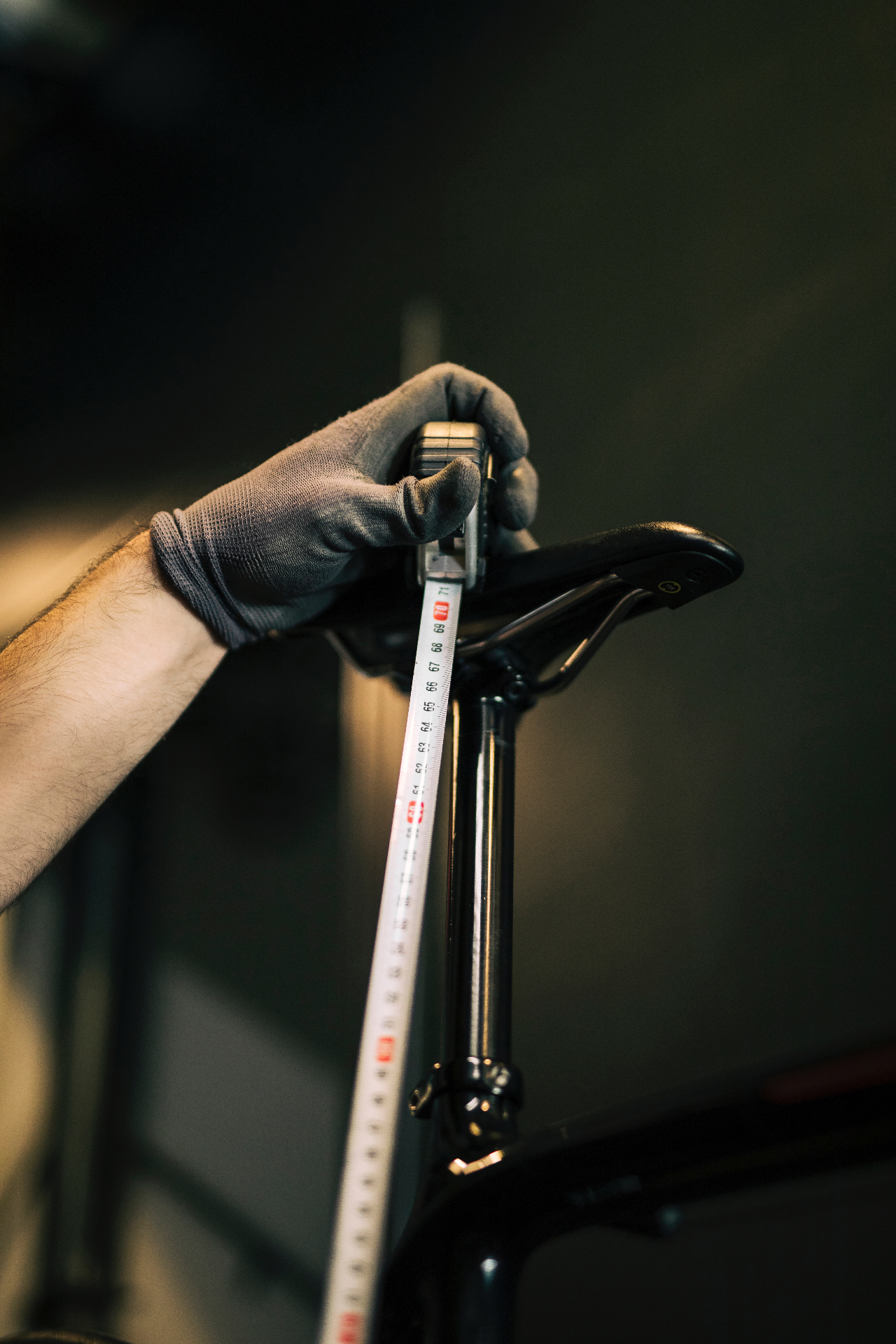
Step 3: Bike fitting with a focus on hip angle
A good bike fitting does not only check saddle height and cleats, but the hip angle in the dynamic pedal motion. Only the combination of stable foot and correct geometry solves the problem sustainably.
When to see a doctor?
For acute, sharp groin pain, swelling, range-of-motion restrictions, or pain lasting longer than two weeks, the complaint requires medical assessment – hip impingement, labral tears or inguinal hernias can cause similar symptoms and need a differentiated diagnosis.
Conclusion: hip flexor pain is a symptom – not a fate
Anyone who looks at the hip flexor in isolation only treats the tip of the iceberg. The lasting solution begins in the foot, runs through the saddle and ends with structured training. Anyone who stabilises the kinetic chain not only loses the pain – they gain watts, comfort and training consistency.
Learn more in our in-depth guide on cycling ergonomics for hip & pelvis or find a certified bike fitting partner near you.
Find the right insole for your setup
Not sure? Start with Comfort or Performance.
Topics:
You might also be interested in
Find more information on this topic on our special pages: