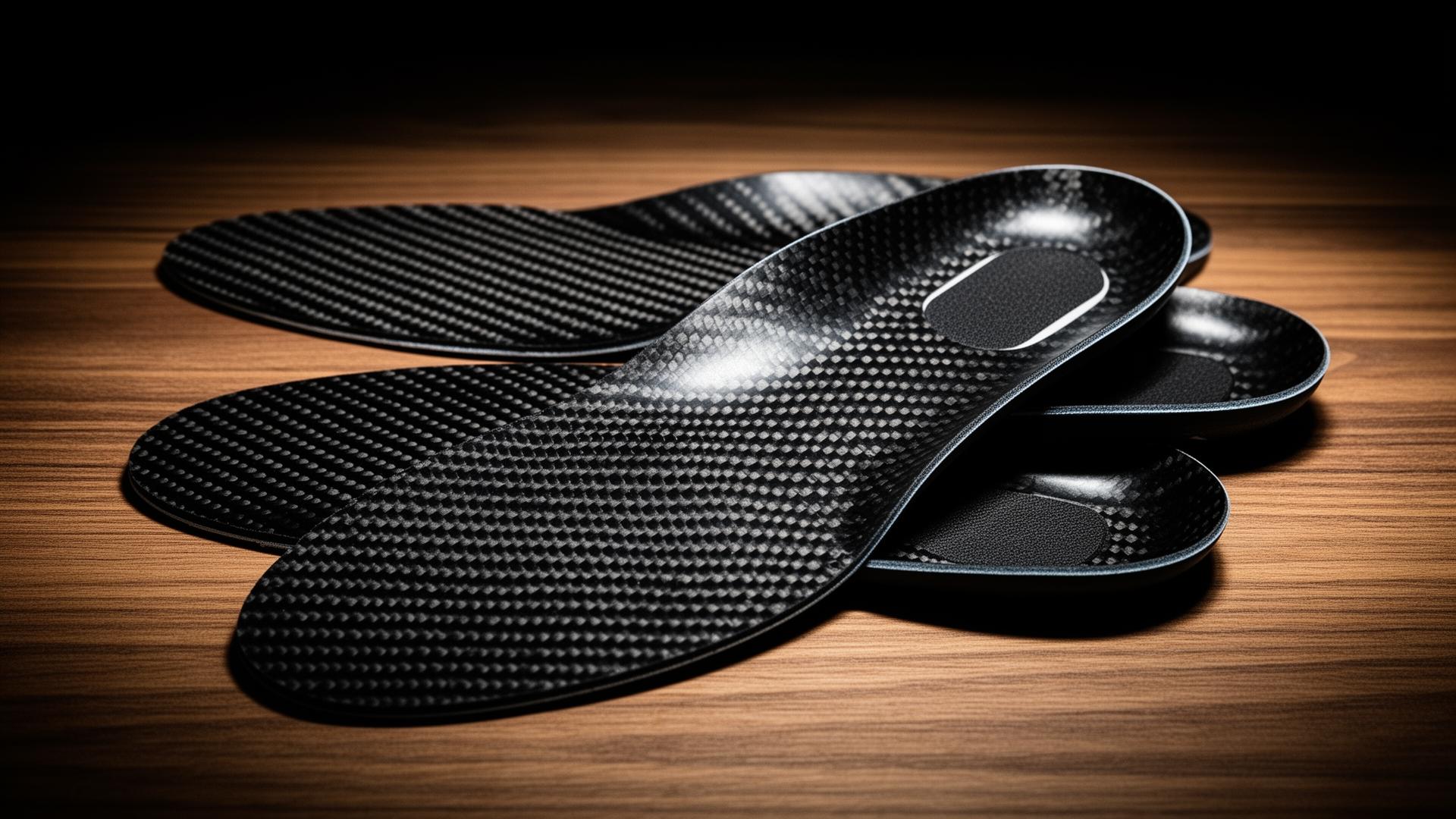
The ultimate buyer's guide for carbon insoles 2026: Honest comparison of all manufacturers (WINSOLE, Solestar, G8, Superfeet), prices, pros, and cons. Learn why custom insoles beat standard.
Buying Carbon Insoles: The Ultimate Buyer's Guide 2026
You want to buy carbon insoles, but are overwhelmed by the selection? Everything from €50 to €300 is available – but what makes the difference? Which manufacturers are reputable? And what do you really need to pay attention to?
In this ultimate buyer's guide, you'll learn everything you need to know to make the perfect decision. No marketing jargon, but hard facts, comparisons, and honest recommendations based on real tests and testimonials. When professionals and ambitious amateurs buy carbon insoles, they are not just looking for comfort, but measurable performance.
What exactly are carbon insoles?
Carbon insoles are highly rigid insoles made of carbon fiber, which are inserted into sports shoes – especially road bike, MTB, and triathlon shoes. Their purpose: to maximize power transfer from the foot to the pedal while preventing foot pain due to pressure points.
- Material: Carbon fiber reinforced polymer (CFRP). Several layers of carbon fabric are pressed with epoxy resin and cured.
- Function: Extreme stiffness prevents the shoe sole from flexing under load. This distributes pressure evenly over the entire foot surface instead of concentrating it pointwise on the forefoot.
- Application: Primarily road bike, triathlon, MTB, and gravel. But also useful for e-bikes, spinning, and indoor cycling.
- Weight: Real carbon insoles weigh between 40-70 grams per pair – significantly lighter than plastic or foam inserts.
Why carbon instead of plastic or foam?
The decisive difference lies in stiffness at minimal weight. But let's look at the materials in direct comparison:
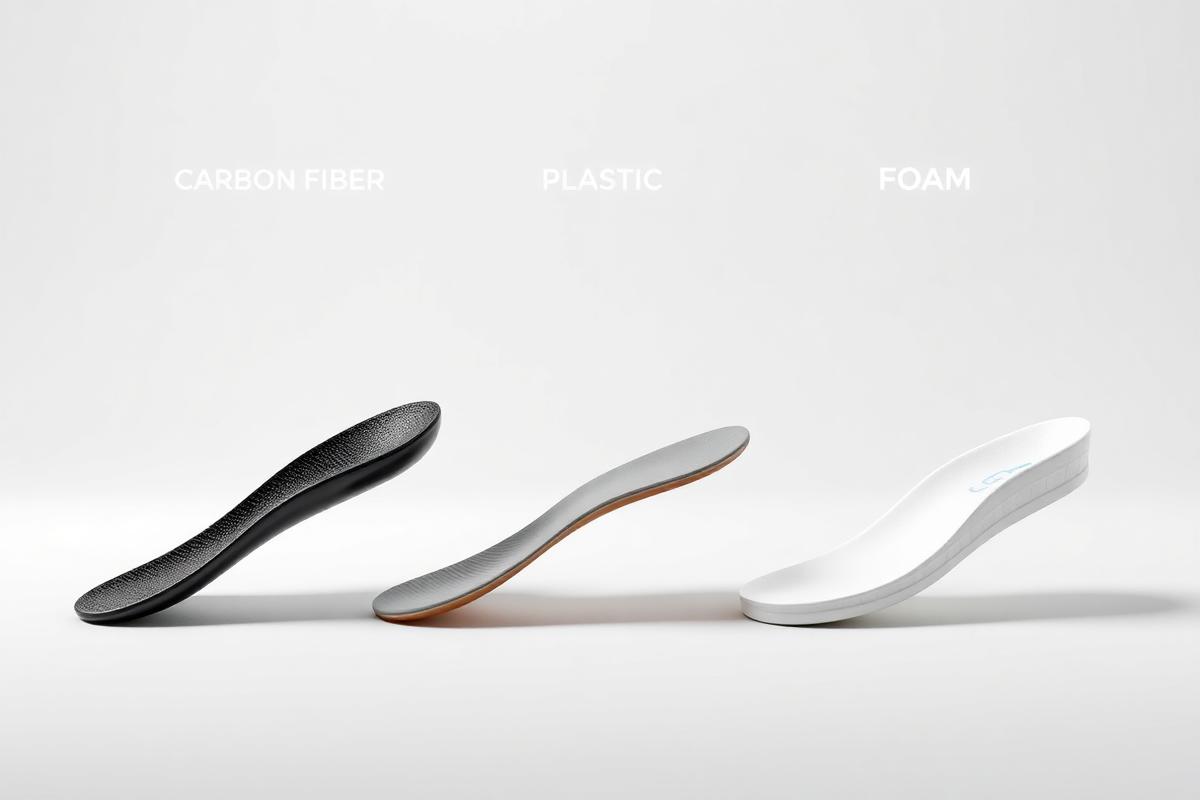
Comparison of Materials
| Material | Stiffness | Weight | Durability | Price |
|---|---|---|---|---|
| Carbon (CFRP) | 10/10 | 40-70g | 5-10 years | 150-300€ |
| Plastic (EVA/TPU) | 4/10 | 80-120g | 1-2 years | 30-80€ |
| Foam | 1/10 | 60-100g | 6-12 months | 15-40€ |
The 5 Most Important Buying Criteria
1. Custom vs. Standard – The Decisive Difference
This is the biggest difference in the market!
Most carbon insoles are standard off-the-shelf products – one shape for all feet. Only a few manufacturers offer genuine custom insoles that are made according to your individual foot impression.
Standard Insoles (most manufacturers):
- One size/shape for all
- No consideration of individual foot shapes
- No adjustment for pronation/supination
- One-size-fits-all approach
- Examples: Solestar, Superfeet Carbon, G8 Performance
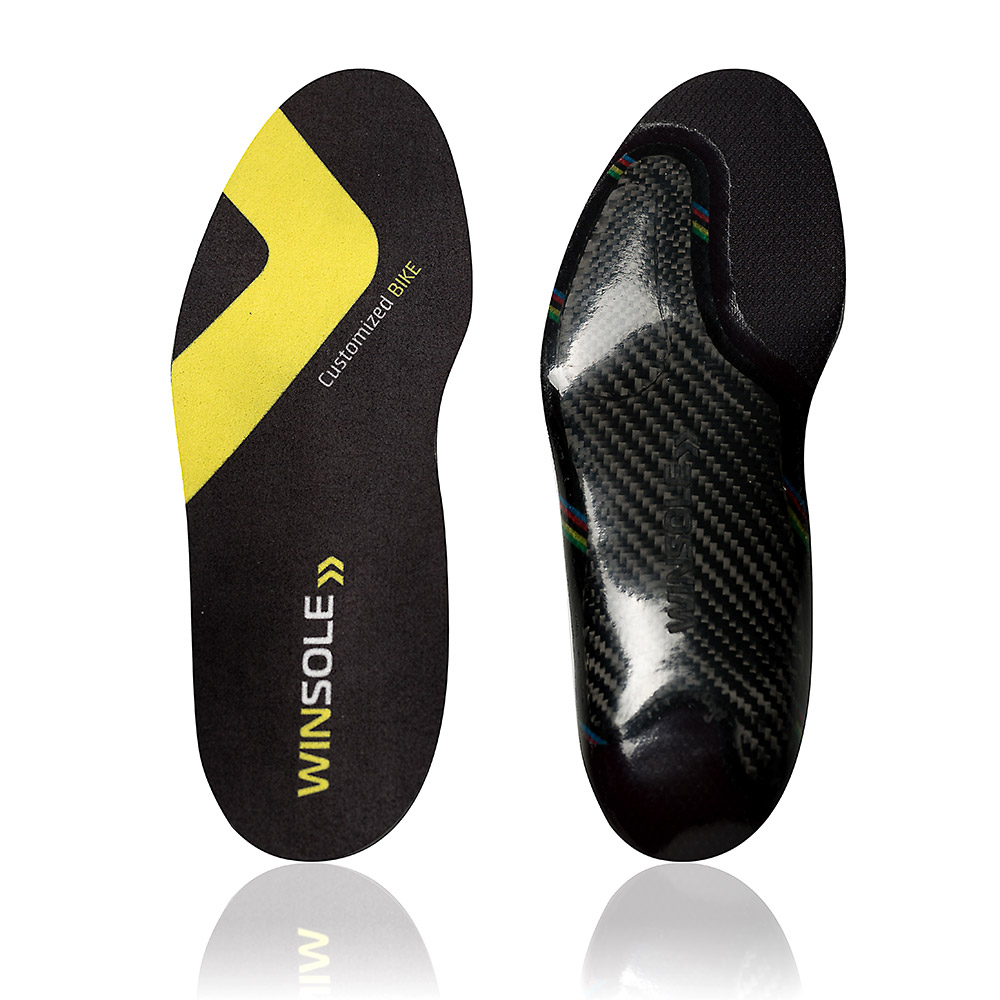
Custom Insoles (WINSOLE only):
- ✓ Foot impression analysis via foam box
- ✓ Individual production according to your data
- ✓ Consideration of misalignments (pronation, supination, leg length difference)
- ✓ Adaptation to your specific pressure points
- ✓ Perfect fit for YOUR foot anatomy
- ✓ Orthopedically custom-made
2. Degree of Stiffness
Not every carbon insole is equally stiff. Some manufacturers mix carbon with plastic or use only a thin carbon layer.
- Full carbon vs. carbon-reinforced: Look for "100% Carbon" or "Full Carbon Construction"
- Thickness: At least 1.5mm of carbon material for true stiffness
- Recommendation Road Bike: Maximum stiffness for optimal power transfer
- Recommendation MTB/Gravel: High stiffness, but with some cushioning
Why carbon insoles complement bike fitting
A professional bike fitting optimizes the position on the bike, but the interface between foot and pedal often remains unaddressed. Even the most expensive carbon shoe loses efficiency if the foot "swims" or collapses inside.
Carbon insoles stabilize the arch of the foot and prevent fatigue of the plantar fascia. Especially on long rides over 3 hours, cyclists notice that numbness in the toes ("Burning Feet Syndrome") disappears when they buy high-quality carbon insoles and use them correctly.
Price Comparison: What do carbon insoles really cost?
| Manufacturer | Price | Material | Type | Special Feature |
|---|---|---|---|---|
| WINSOLE | 199€ | 100% Carbon | CUSTOM | Custom-made according to foam impression |
| Solestar BLK2 | 159,95€ | 100% Carbon Core | Standard | Ankle Support |
| G8 Performance | 200-250€ | Carbon | Standard | 5 Arch Heights |
| Superfeet Carbon | 48-55€ | Carbon-reinforced | Standard | NOT full carbon |
⚠️ Beware of Cheap Offers
On Amazon, "carbon insoles" are available from €30. This is usually just a thin carbon-look film on plastic. Real carbon costs at least €60-€80 in production just for the raw materials and vacuum processing alone.
Comparison of Major Manufacturers
🏆 1. WINSOLE – The Custom Solution
Origin: Germany (developed by Jens Machacek)
Price: 199€
Material: 100% Full Carbon
Type: CUSTOM (custom-made according to foam impression)
Special Features:
- Only manufacturer with true custom manufacturing
- Orthopedically custom-made based on a foam impression
- Considers misalignments, pronation, pressure points
- Developed by bike fitting experts
- Made in Germany
- Manufacturer's statement: Significant watt increase through optimized biomechanics
The Anatomy of the Foot in a Cycling Shoe
To understand why one should buy carbon insoles, one must understand the stresses of cycling. Unlike running, the foot in cycling is a lever, not a shock absorber. The longitudinal arch of the foot tends to collapse under high load. This leads to an internal rotation of the knee.
High-quality carbon insoles act here as a foundation. They support the foot exactly where power is transferred from the midfoot to the forefoot and finally to the pedal plate. If you want to buy carbon insoles, you should therefore ensure that the metatarsal pad (the arch for the midfoot) is positioned exactly in the right place – which is often a matter of luck with standard insoles.
Durability: How long do carbon insoles last?
A big advantage when you buy carbon insoles is material fatigue – or rather: its absence. While EVA foams are permanently compressed after about 500 to 1,000 kilometers and lose their supportive function, carbon retains its shape for years.
Care tips for your insoles:
1. After riding in the rain, remove them from the shoe and let them dry at room temperature (not on the heater!).
2. Clean with a damp cloth and mild soap.
3. Regularly check the surface for cracks if coarse pebbles have gotten into the shoe.
Conclusion: Which Carbon Insoles to Buy?
The choice of the right insole depends on your goals. If you are just looking for a bit more stiffness, standard models are sufficient. However, if you have problems with numb feet, want to prevent knee pain, or want to get the maximum watts out of every pedal stroke, there's no way around a custom-made solution.
Our recommendation: Invest once in a custom-made solution from WINSOLE, instead of trying three different standard insoles that ultimately do not fit your foot anatomy perfectly. Buying carbon insoles is an investment in your health and your performance on the bike.
Find the right insole for your setup
Not sure? Start with Comfort or Performance.
Topics:
You might also be interested in



Find more information on this topic on our special pages: