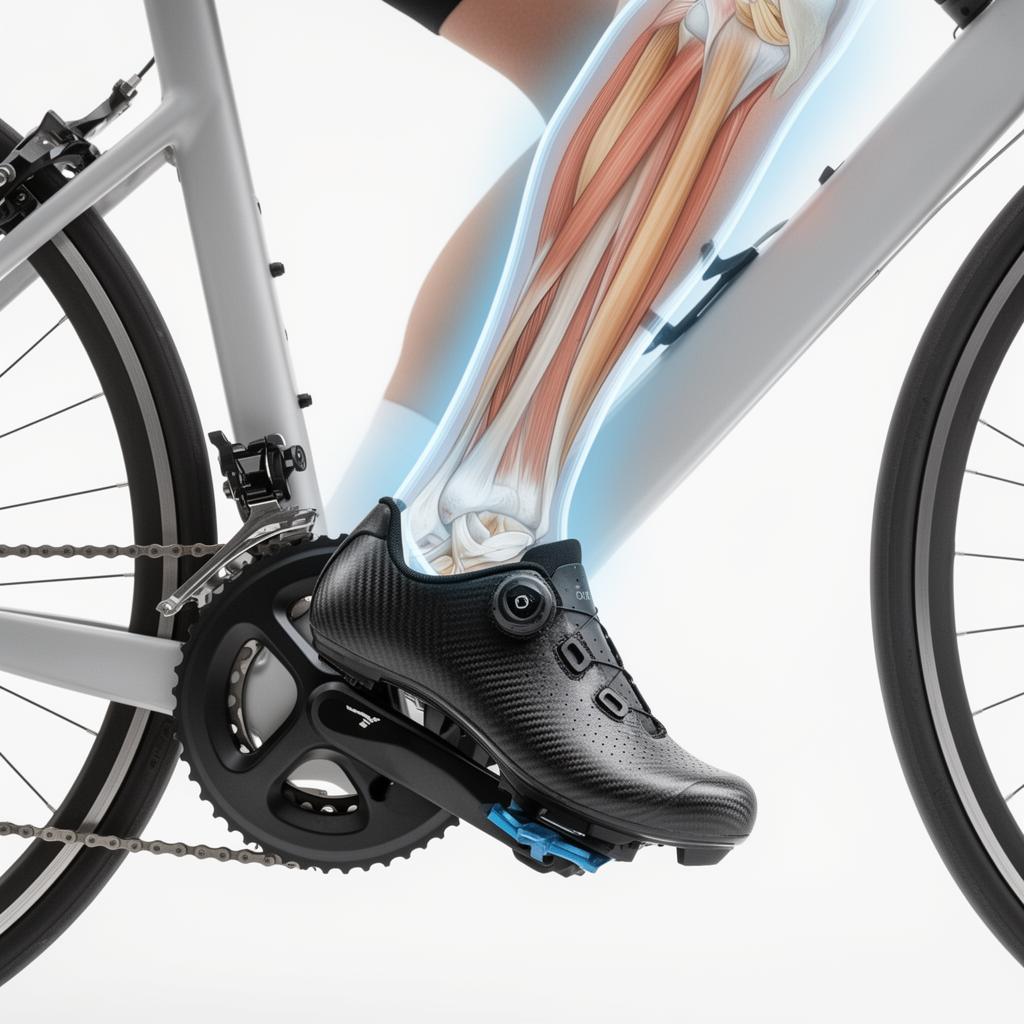
Compensating for leg length discrepancy in cycling: How carbon insoles relieve pain and optimize your power transmission.
Compensating for Leg Length Discrepancy: Carbon Insoles as a Biomechanical Solution in Cycling
Having to compensate for leg length discrepancy is one of the most common challenges for ambitious cyclists, triathletes, and bike fitters. What often goes unnoticed in everyday life can lead to massive problems on a racing bike with several thousand pedal revolutions per hour. Lower back pain, unilateral knee pain, or an unstable sitting position are often the result. As experts in foot biomechanics and carbon technology, we at WINSOLE know that the solution goes far beyond a simple lift under the shoe. In this specialist article, we shed light on the anatomical background and show why carbon insoles are a decisive factor for pain-free performance.
The Anatomy of Inequality: Why We Must Take Leg Length Discrepancies Seriously
Hardly any human is absolutely symmetrical. Studies show that up to 90% of the population has a difference in leg length. In everyday life, the body compensates for these differences through a slight pelvic tilt or an adjustment of stride length when walking. In cycling, however, the situation is fundamentally different.
Since the feet are firmly anchored in the clipless pedals and the pelvis is on a firm surface (the saddle), the "human-machine" system is closed. Any asymmetry of the legs forces compensation in the musculoskeletal system. If we do not compensate for leg length discrepancy, the body seeks the path of least resistance. This often leads to a "tilting" of the pelvis towards the shorter side, which in turn forces the spine into a misalignment.
Anatomical vs. Functional Leg Length Discrepancy
Before we talk about solutions like our customized insoles, we need to distinguish between two types of discrepancy:
- Anatomical Leg Length Discrepancy: Here, the bone structures (thigh or lower leg) are actually of different lengths. Causes can be growth disorders, accidents, or operations.
- Functional Leg Length Discrepancy: The bones are the same length, but due to muscular imbalances, pelvic torsion, or foot deformities (such as a pronated foot), one leg appears shorter.
For bike fitters, this distinction is essential. While an anatomical discrepancy must be physically compensated, a functional discrepancy often requires correction of foot position and targeted mobilization.
Symptoms in Cycling: When Asymmetry Becomes a Performance Brake
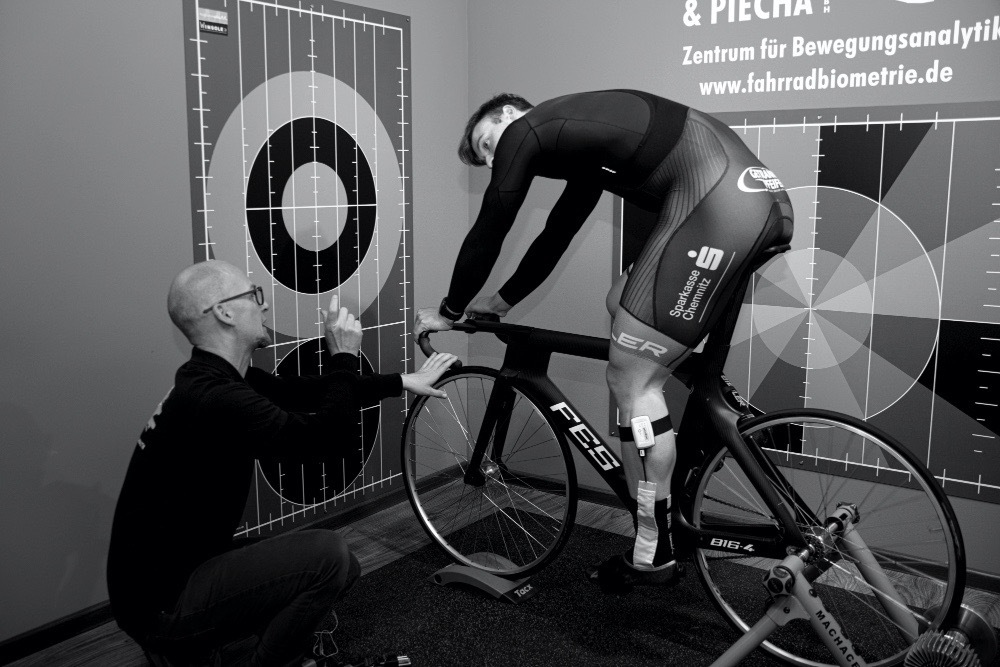
Anyone who does not have their leg length discrepancy compensated in time risks chronic overuse injuries. Typical signs we see in our many years of practice at WINSOLE are:
- Unilateral Knee Pain: Often on the longer leg, as it is bent more at the top dead center, or on the shorter leg due to hyperextension at the bottom dead center.
- Back Pain (Lumbar region): The tilting of the pelvis places asymmetrical stress on the lumbar spine muscles.
- Numbness: An unstable foot leads to unstable pressure conditions in the shoe.
- Saddle Problems: Unilateral chafing or pressure points, as the rider unconsciously tries to compensate for the discrepancy by adopting an uneven sitting position.
"A millimeter on the foot can decide between victory and defeat. The biomechanical chain begins at the bottom – if the foundation is not right, the whole system wobbles." – WINSOLE Expert Team.
The Biomechanical Solution: Why Carbon?
Conventional foam insoles quickly reach their limits when correcting leg length discrepancies. Under the high pressure loads in cycling (up to several hundred kilograms in the sprint phase), soft material compresses. The compensation effect is lost.
This is where the WINSOLE principle of action comes in. Our carbon insoles offer incomparable stiffness with minimal weight. When we compensate for leg length discrepancy, we use carbon not only for power transmission, but as a stable platform that holds the foot in the optimal neutral position.
Advantages of WINSOLE Carbon Technology:
- No Material Fatigue: Carbon retains its shape for years, while EVA insoles wear out after a few thousand kilometers.
- Maximum Power Transmission: The stiff sole transfers energy directly to the pedal, without the foot "floating" in the shoe.
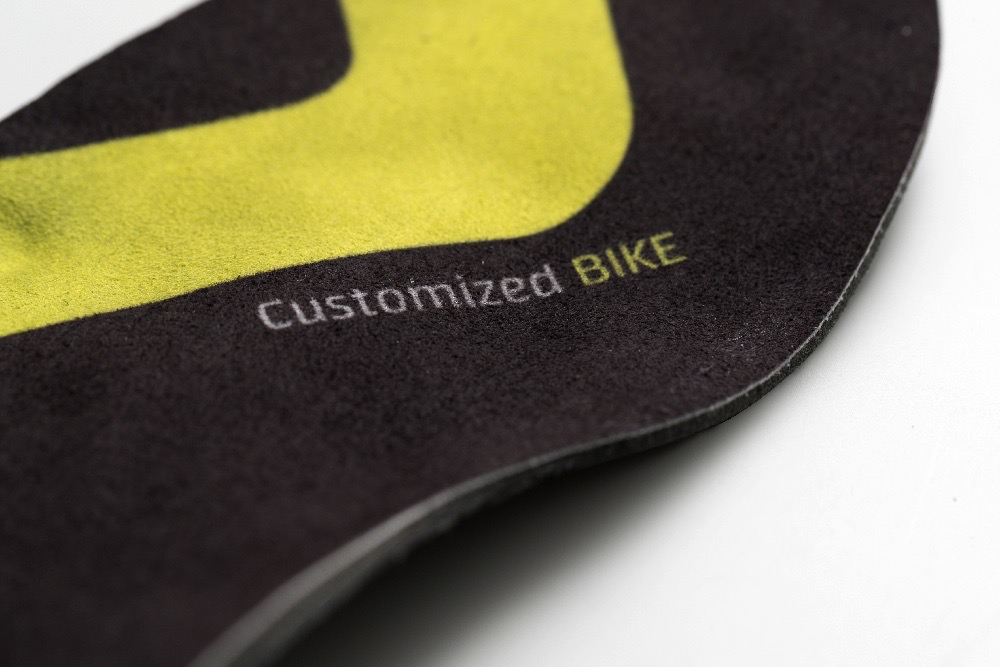
- Individual Adjustability: Especially with our Customized insoles, we can integrate specific lifts and wedges directly into the carbon structure.
Step-by-Step: Correctly Compensating for Leg Length Discrepancy
How do professionals go about creating symmetry on the bike? The process requires precision and expert knowledge.
1. The Analysis in Bike Fitting
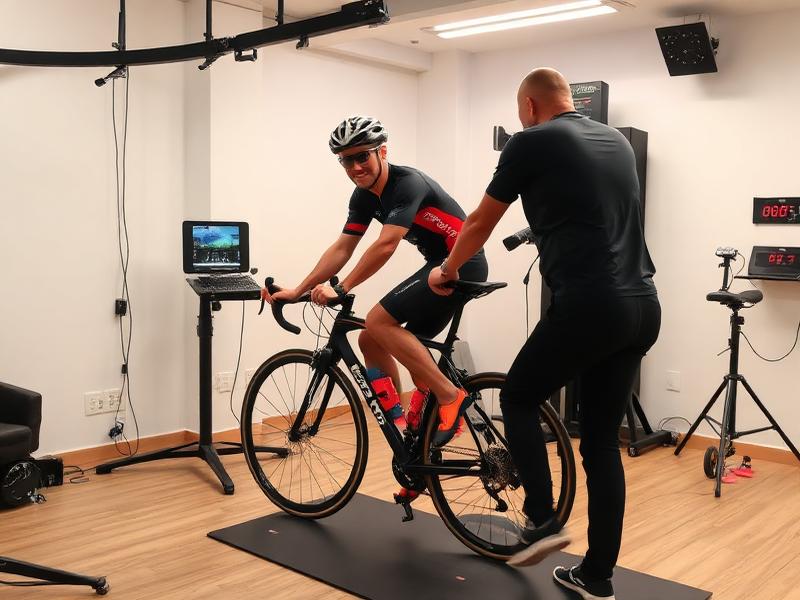
A professional bike fitting is the first step. Here, it is measured whether the discrepancy occurs when sitting or standing and how the knee path behaves during pedaling. A laser system often clearly shows how the knee of the shorter leg deviates inwards to "save distance."
2. Stabilizing the Foundation
Before screwing wedges under the cleats, the foot in the shoe must be stabilized. An instability in the ankle joint can feign or amplify a leg length discrepancy. Our Performance Carbon Insole is the standard tool in professional sports for this purpose, to straighten the longitudinal arch.
3. The Mechanical Compensation
In the case of a true anatomical discrepancy, there are three ways to compensate:
- Insole with Heel Wedge: Only advisable for minimal discrepancies (up to 3mm), as otherwise the heel seat in the shoe is lost.
- Cleat Spacers (Shims): Plastic plates between the shoe sole and the clipless system. Ideal for discrepancies of 5mm or more.
- Integrated Sole Compensation: The most elegant solution, where the sole itself bridges the discrepancy.
Practical Tip for Triathletes and Long-Distance Riders
If you are trying to compensate for a leg length discrepancy, do so gradually. The body has often adapted to the misalignment over decades. Anyone who abruptly compensates for 10mm risks new complaints in the hip or sacroiliac joint (SIJ). We recommend starting with 50% of the measured discrepancy and gradually increasing it over several weeks.
In addition, it should be noted that in triathlon, the transition to running is critical. A correction in the cycling shoe must be coordinated with the correction in the running shoe so as not to disturb the biomechanical chain.
Research and Expertise: 25 Years of WINSOLE
Behind every WINSOLE lies the knowledge from over a quarter-century of orthopedic research and work with top athletes. When world-class riders like Emma Hinze or Mona Mitterwallner trust our products, it's because every detail counts. A leg length discrepancy is not an obstacle for us, but a source of biomechanical optimization.
In our manufactory in Germany, we produce every insole with the highest precision. Especially with the Customized variant, the individual anatomy flows directly into the carbon layout. This makes the insole the link between human and technology.
Summary: The Path to Pain-Free Performance
Anyone who wants to compensate for their leg length discrepancy should leave nothing to chance. A combination of professional bike fitting and high-quality carbon insoles is the gold standard.
Checklist for affected cyclists:
- Have an orthopedist clarify whether the discrepancy is anatomical or functional.
- Visit a bike fitter who specializes in dynamic analyses.
- Invest in a stable base with WINSOLE carbon insoles to rule out foot deformities as a cause.
- Begin compensation moderately and listen to your body's signals.
Maximum watt values are only possible if the biomechanics are correct. An uncorrected leg length discrepancy robs you of energy with every pedal stroke. With the right support, an asymmetrical movement sequence becomes a harmonious, powerful cycle.
Find the Right Solution Now
Whether you are a hobby cyclist or a professional – your feet deserve the best support. Discover our range for cycling and find the insole that perfectly suits your needs. We are always available for individual advice.
Ready for the next level? Visit our online shop and configure your WINSOLE Performance or make an appointment for a customized solution.
Find the right insole for your setup
Not sure? Start with Comfort or Performance.
You might also be interested in

Find more information on this topic on our special pages: