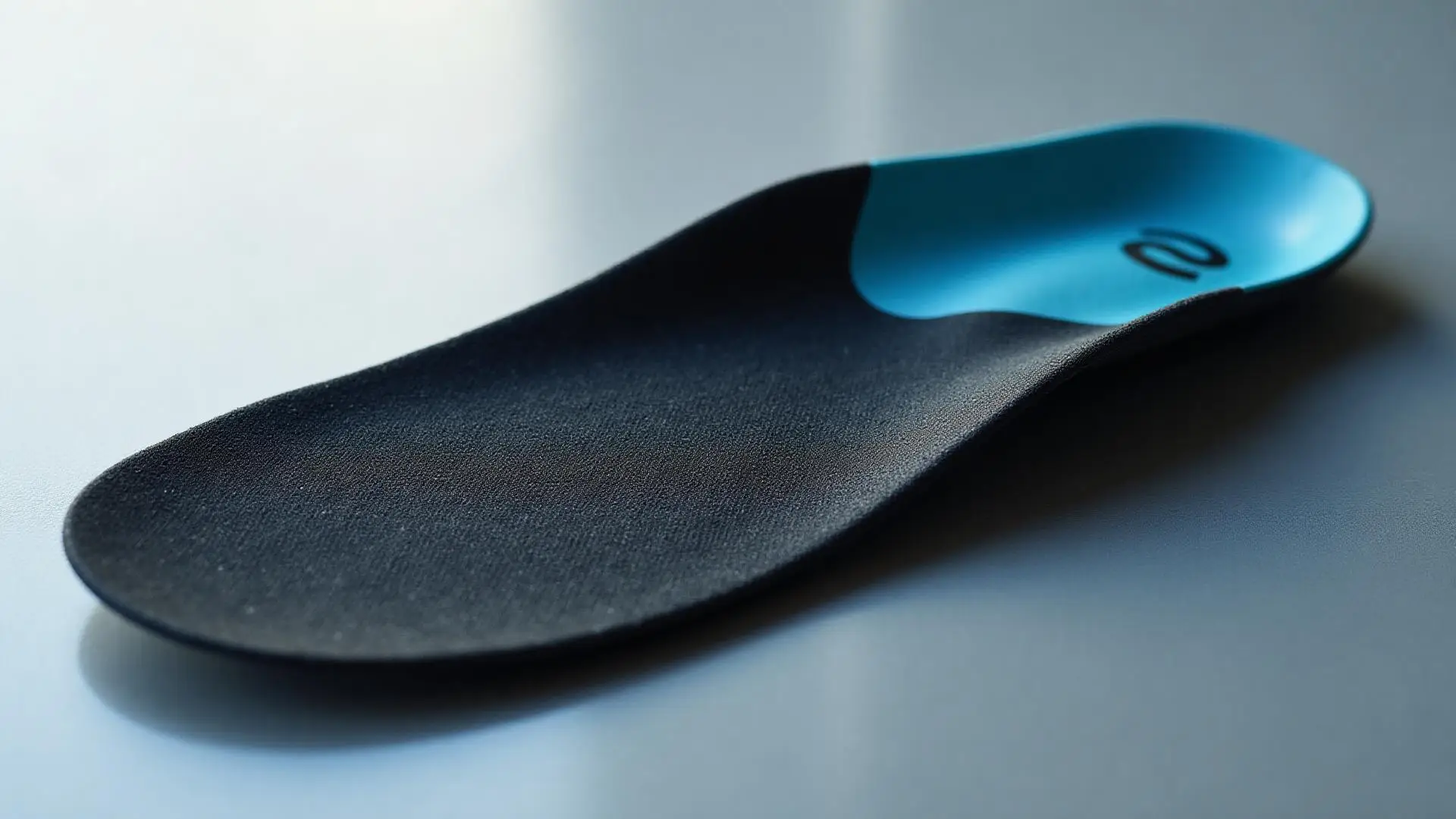
You've invested in a superb carbon bike,顶级 aero wheels, and a professional bike fit. Yet, you're still plagued by numb toes, hot spots, or the nagging feeling that you aren't putting down the power you should be. The culprit might be hiding in plain sight: inside your shoes. The standard foam or plastic insoles that come with most cycling shoes are often the weakest link in the chain, silently robbing you of watts and stability. This guide compares soft plastic with rigid carbon fibre to reveal why your insole material is the true foundation of your performance.
The Missing Link in Your Bike Fit: Why Your Foundation Matters
Imagine building a powerful engine and placing it on a chassis made of jelly. It wouldn't matter how much horsepower you had; the unstable base would absorb energy, create instability, and prevent the power from ever reaching the wheels. This is precisely what happens when cyclists use the flimsy, generic insoles that come standard in most cycling shoes. While we obsess over frame weight and aerodynamics, the most critical interface—where your body generates force—is often neglected. Your foot is the lever that transfers every watt you produce to the pedal. If that lever isn't supported, you're leaking power with every single pedal stroke.
The Problem with Standard Plastic Insoles: Softness is Not Your Friend
The default insoles in most cycling shoes are typically made from soft foam (like EVA) or flexible plastics. Their main purpose is to provide a cheap, basic layer of cushioning. For a casual rider, they might seem adequate. For any cyclist serious about performance and comfort, however, they present a significant problem: they deform under load.
Cycling is not like running, where the foot needs to flex and roll. In cycling, your foot should act as a rigid, stable platform. When you push down on the pedal, a soft insole compresses. This creates several issues:
- Energy Loss: A portion of the force you generate is wasted simply squashing the foam instead of driving the pedal. At a cadence of 90 rpm, a four-hour ride involves over 20,000 pedal strokes. A tiny bit of energy lost on each one adds up to a significant performance deficit.
- Instability: As the material gives way, your foot arch can collapse, and your foot may shift inside the shoe. Your muscles must then work overtime to stabilise your knee and leg alignment, leading to premature fatigue and increasing the risk of overuse injuries.
- Discomfort: The lack of even pressure distribution on an unstable surface often leads to common cycling complaints like "hot spots" (burning sensations) and numbness in the toes, as pressure concentrates in small areas.
Enter Carbon Fibre: The Unyielding Platform for Peak Power
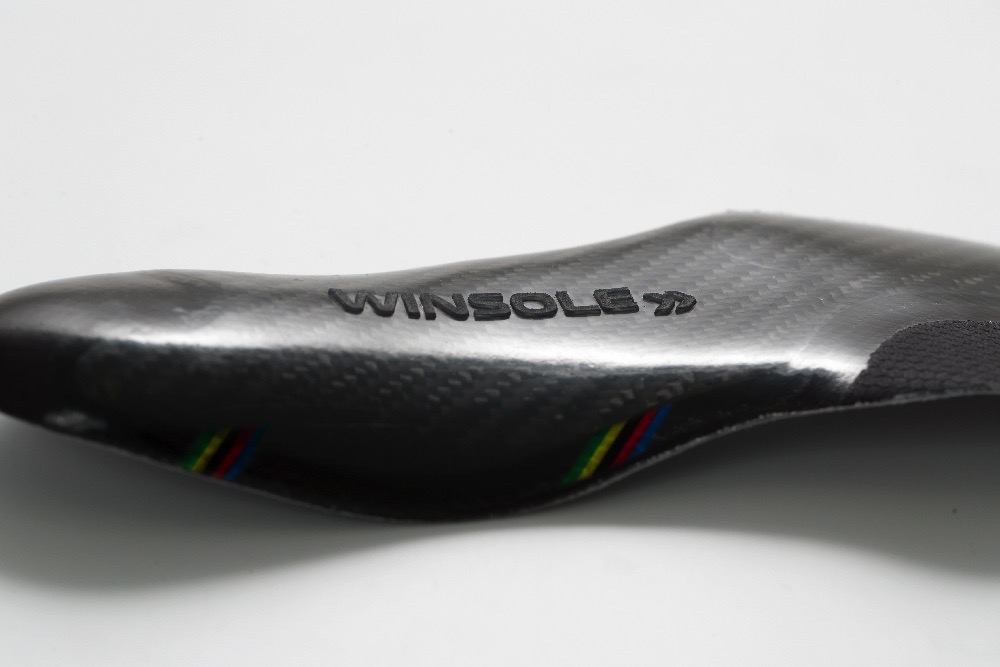
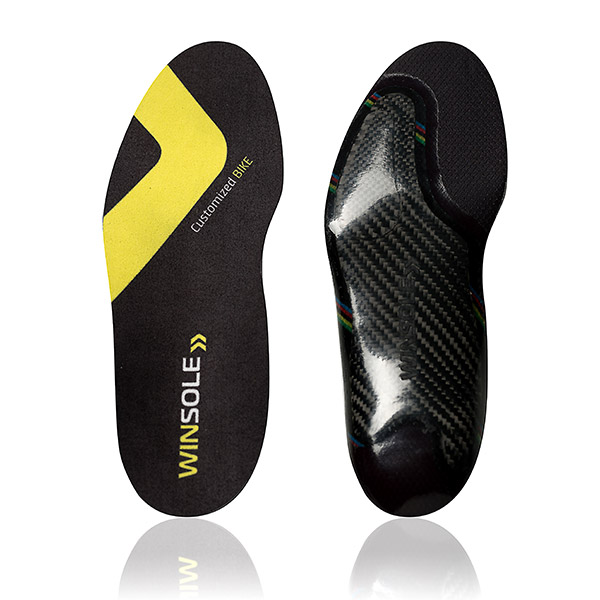
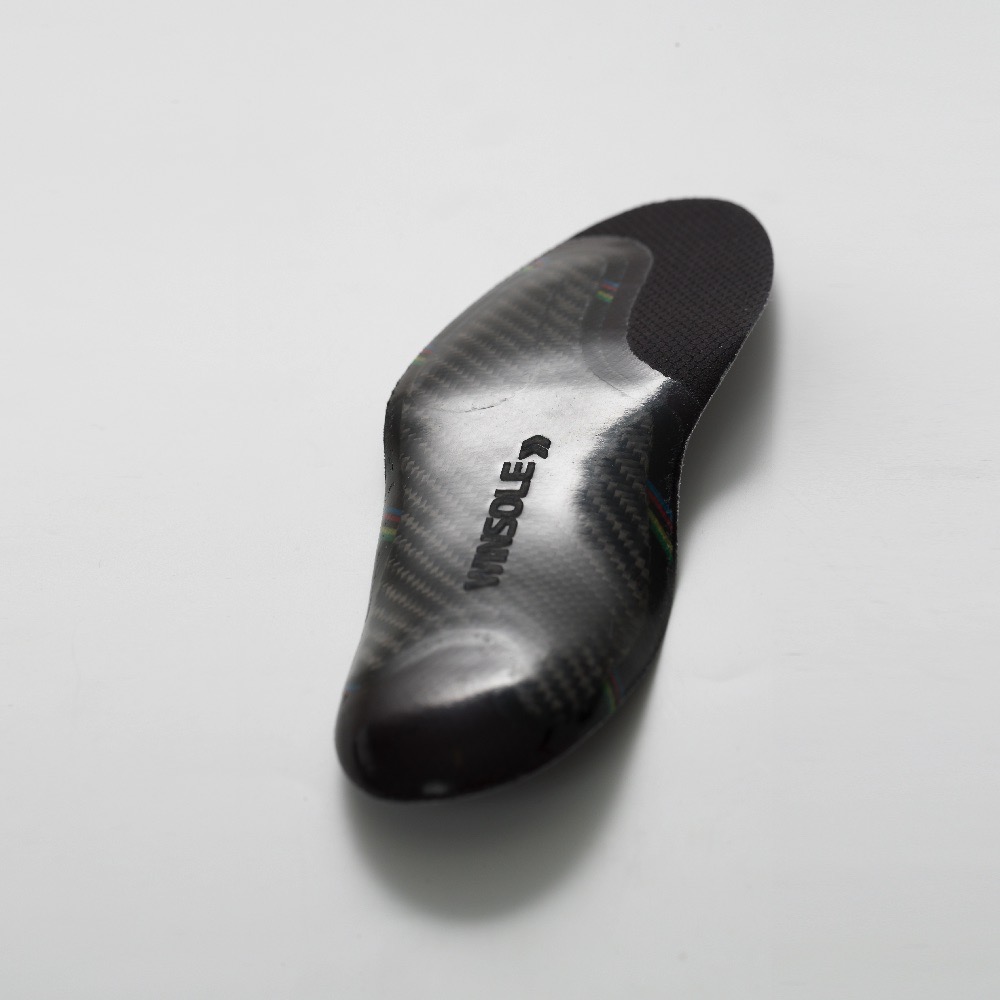
Just as carbon fibre revolutionised bicycle frames, it also offers the ultimate solution for insoles. Carbon provides unparalleled stiffness and is incredibly lightweight, making it the ideal material for creating a stable, power-transferring base inside your shoe. A high-performance carbon insole, such as the WINSOLE Performance, is not just a liner; it is a precision-engineered component designed to optimise your biomechanics.
Maximum Power Transfer Through Supreme Stiffness
The core benefit of carbon is its refusal to bend under pressure. Unlike plastic, a carbon fibre insole creates a solid connection between your foot and the rigid sole of your cycling shoe. This means that virtually 100% of the energy you generate is transferred directly into the drivetrain. Riders often report an immediate, noticeable increase in power and a more "connected" feeling to the bike. The stable platform ensures your foot acts as the efficient lever it is meant to be.
A Worthwhile Investment in Durability and Weight
While standard insoles deform and lose their supportive properties after just one season of hard riding, a Winsole carbon insole maintains its shape and biomechanical integrity for years. It is a long-term upgrade that pays dividends season after season. Furthermore, the exceptional strength-to-weight ratio of carbon means you gain this incredible stability without a weight penalty—a critical factor for any cyclist counting grams.
"A stable foot is the bedrock of an effective bike fit. Without it, adjustments to saddle height or cleat position are merely compensating for an unstable foundation." - The Winsole Team
Better Support, Better Comfort
It might seem counter-intuitive, but a stiffer insole is often far more comfortable on long rides. By providing rigid support to the arch of your foot, a carbon insole distributes pressure evenly across the entire surface. This eliminates the pressure points that cause hot spots and numbness. By preventing the arch from collapsing, it also promotes better alignment of the ankle, knee, and hip, reducing strain and discomfort throughout the kinetic chain. For riders seeking the ultimate in personalised support, our WINSOLE Customized models are moulded to your unique foot anatomy, providing a level of fit and performance that generic insoles can never match. Our range also includes the Winsole Comfort (€109) for those prioritising stability and relief on longer tours.
Frequently asked questions
Q: Aren't carbon insoles uncomfortable because they are so stiff?
A: Not at all. In cycling, stiffness equates to support and stability, which are the keys to long-distance comfort. A properly shaped carbon insole distributes pressure evenly across the foot, preventing the painful "hot spots" and numbness often caused by flimsy, unsupportive insoles that allow pressure to concentrate in small areas.
Q: Will carbon insoles fit in my current cycling shoes?
A: Yes. WINSOLE insoles are designed to replace the standard factory insoles in all major brands of cycling shoes. Simply remove the existing insole and insert your new carbon one. The precise fit ensures it integrates seamlessly with your footwear.
Q: How long do carbon insoles last compared to standard insoles?
A: A key advantage of carbon fibre is its durability. While foam or soft plastic insoles compress and lose their supportive shape within a single hard season, a WINSOLE carbon insole will maintain its structural integrity and biomechanical benefits for many years, making it a sound long-term investment in your performance and comfort.
Q: I'm not a professional cyclist. Do I still need carbon insoles?
A: Absolutely. Benefits like improved stability, reduced fatigue, and prevention of discomfort like numbness and hot spots are valuable for any cyclist, regardless of level. If you want to get the most power and enjoyment out of every ride, a carbon insole is one of the most effective upgrades you can make.
Find the right insole for your setup
Not sure? Start with Comfort or Performance.
Topics:
You might also be interested in
Find more information on this topic on our special pages: