How do carbon insoles work? The science behind the material and why it improves power transmission.
The Function of Carbon Insoles in Cycling: Science Made Simple
In modern cycling, every watt is a battle. Aerodynamics, rolling resistance, and weight have been the focus of development for years. But an often-neglected aspect is the interface between the human powerhouse and the machine: the foot. Here, high-quality carbon insoles in their function play a decisive role in maximum performance. At WINSOLE, we combine over 25 years of expertise in foot biomechanics with state-of-the-art material technology to bridge the gap between comfort and maximum performance. In this article, we explain the scientific background of why a carbon insole is far more than just a hard piece of plastic in your shoe and how the carbon insole function optimizes your performance. Learn how carbon insoles in cycling in their function help to increase your efficiency while ensuring comfort. The precise functioning of carbon insoles is the key to optimized power transmission and stability.
The Biomechanics of the Foot in Cycling Shoes: Why Stability is Crucial
To fully understand the carbon insole function, we must first look at the anatomy of the human foot during cycling. The foot is evolutionarily designed for walking and running. It acts as a shock absorber. The longitudinal and transverse arches absorb impact forces with every step.
However, this mechanism is counterproductive in cycling. There is no landing phase as in running, but rather continuous, cyclical pressure. If the arch of the foot gives way under the load of the pedal stroke (the so-called pronation), valuable energy is lost. This energy is not converted into propulsion but dissipates in the elastic deformation of the foot. In addition, this "collapsing" often leads to knee problems, as the axis between the hip, knee, and ankle becomes unstable.
"Efficient power transmission begins at the foundation. Without a stable base in the shoe, the stiffest frame in the world is useless." - WINSOLE Biomechanics Team.
Carbon as a Wonder Material: Optimal for Carbon Insole Function

Carbon fibers (carbon fiber reinforced plastic) offer a unique stiffness-to-weight ratio. But a carbon insole for road bike shoes is not just about hardness. It's about the targeted control of flexibility.
- Torsional stiffness: Carbon prevents unwanted rotation of the foot in the shoe.
- Reset force: After a load phase, the material immediately returns to its original shape.
- Durability: Unlike soft foam insoles, carbon does not fatigue. The support remains constant over thousands of kilometers.
- Thickness: Due to their high strength, carbon insoles can be built extremely flat, which barely affects the volume in the shoe.
At WINSOLE, we use these material properties to achieve specific foot guidance. A carbon insole acts as an external skeletal structure that supports the arch of the foot and establishes a direct connection to the pedal plate.
The Carbon Insole Function: 3 Pillars of Performance
The effect of our insoles is based on three central scientific pillars, which are closely linked to the principle of operation of WINSOLE technology.
1. Optimization of Power Transmission through Carbon Insoles
In a standard cycling shoe, the included insole is usually a simple piece of foam. Under load, this foam is compressed. This leads to a spongy feeling when pedaling. A carbon insole, on the other hand, offers hard resistance. The pressure from the big toe joint is transferred directly to the pedal via the shoe sole. Measurements in the biomechanics laboratory show that this significantly evens out the pressure distribution on the pedal surface, which increases efficiency (power output). This converts the lost energy, which would otherwise escape through the deformation of the foot arch, directly into propulsion. The result is a noticeable increase in performance, which is particularly evident in crucial race moments or during long rides.
2. Stabilization of the Leg Axis: Fewer Injuries, More Control
A common mistake in cycling is the inward or outward deviation of the knees (V-shape or O-shape). The cause often lies in the instability of the rearfoot. Through the precisely fitting support of the carbon core, the heel bone is stabilized. The biomechanical chain is straightened. This is an essential part of a professional bike fitting. A stable leg axis not only reduces the risk of injury but also ensures more aerodynamic leg guidance close to the frame. Precise foot guidance in the shoe also means better control over the bike, especially in curves or at high speeds.
3. Relief of Nerves and Vessels: Comfort for Long Rides
Burning feet or numb toes are the result of localized pressure points and compression of the metatarsal nerves. Due to the anatomical shape of our carbon insoles, pressure is distributed over a large area. The transverse arch is gently supported (pelotte), relieving the metatarsal heads. Blood can circulate better, and nerve pathways are not constricted. This aspect of the carbon insole function is particularly crucial for long-distance riders and triathletes, as it minimizes fatigue and thus maintains performance over a longer period.
Scientific Excursion: Isometric vs. Dynamic Load and the Role of Carbon Insoles
In cycling, we are dealing with a primarily isometric load on the foot muscles. Unlike walking, the foot changes its position in the shoe only slightly but is under high static pressure. Studies show that continuous muscular stabilization of the foot arch leads to fatigue during prolonged exertion. The carbon insole passively takes over this holding work. This keeps the muscles fresher for the actual propulsion work longer. It is the passive support provided by the carbon insole that makes the decisive difference and allows athletes to maintain their performance until the end.


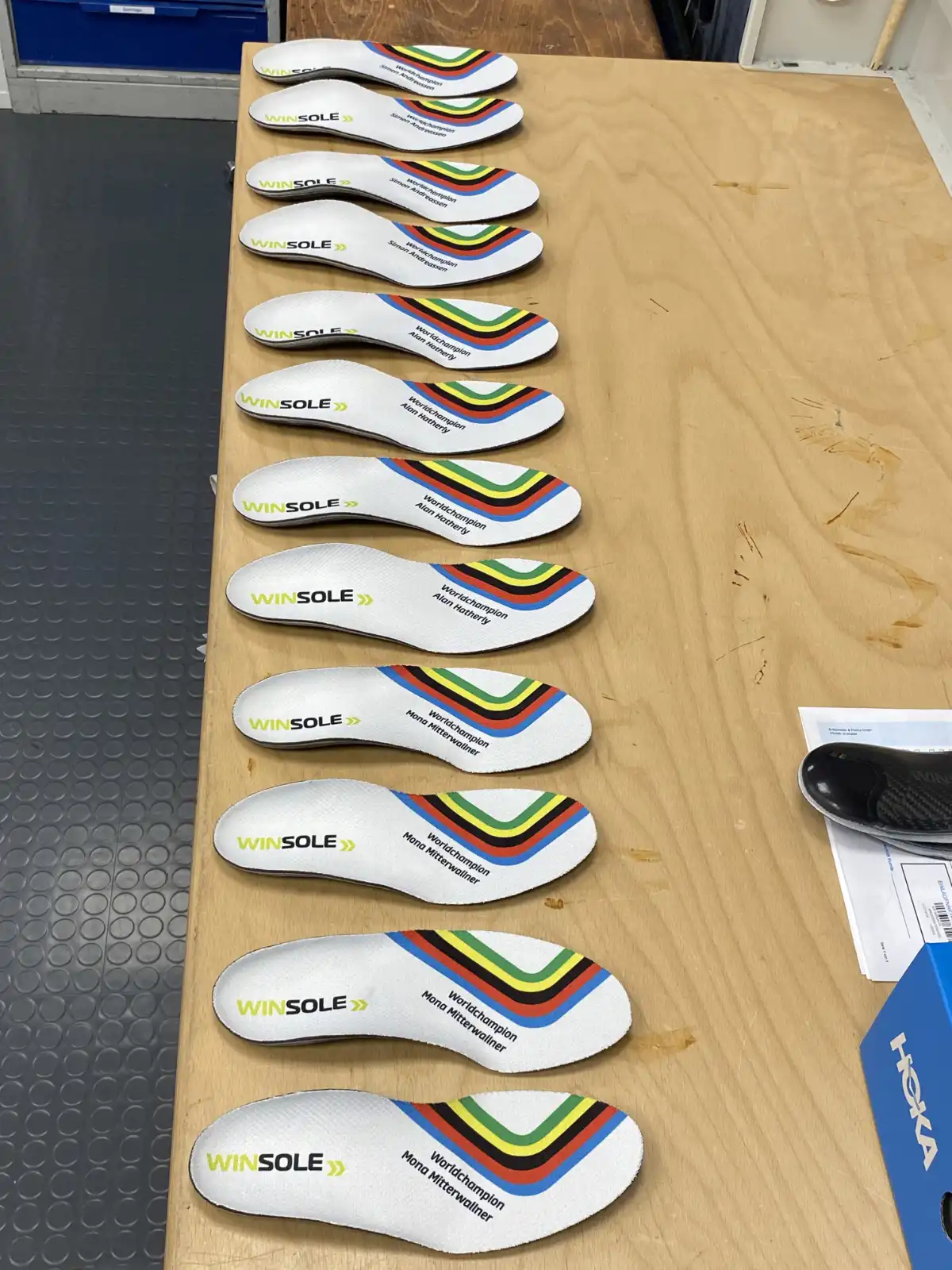
Top athletes like world champion Emma Hinze or MTB professional Mona Mitterwallner rely on this technology for precisely these reasons. In a sprint or on a steep climb, these nuances make the difference between victory and a podium finish.
Individual Customization vs. Standard Products: Finding the Perfect Carbon Insole in the Context of the Carbon Insole Function
Every foot is as unique as a fingerprint. That's why at WINSOLE, we offer different levels of perfection. While our Comfort series already offers a significant improvement over standard insoles, custom-made insoles represent the optimum.
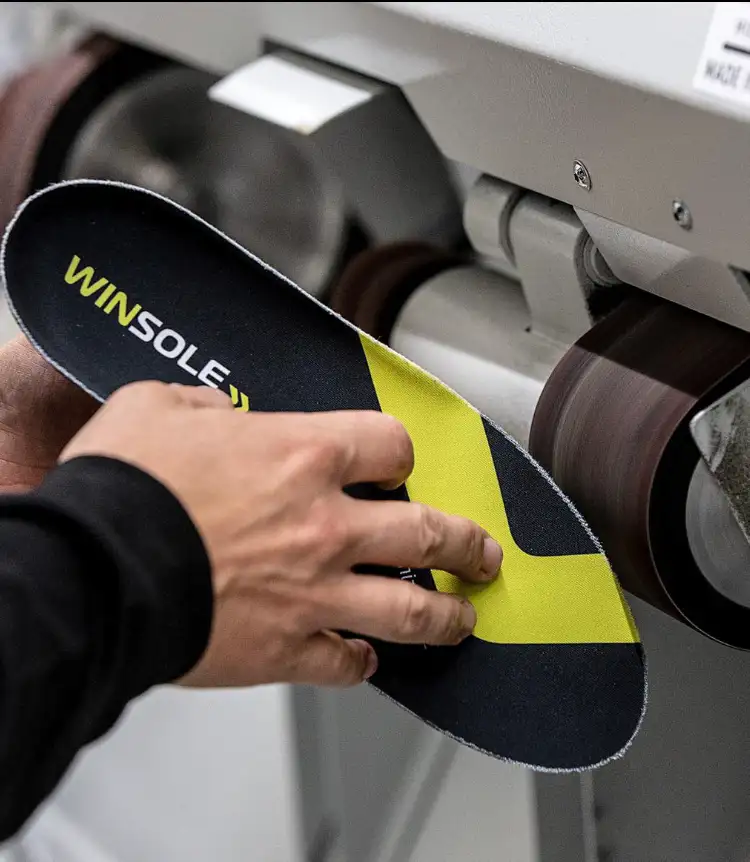
In our manufactory in Germany, we handcraft these insoles. The carbon structure is precisely tailored to the pressure points and the specific anatomy of the wearer. This is particularly important for triathletes who have to run a marathon after the cycling split and whose feet need to be maximally protected on the bike. The investment in a custom-made carbon insole pays off in optimized performance and comfort in the long run.
Practical Tips: How to Choose the Right Carbon Insole and Optimize the Carbon Insole Function for You
If you are considering which carbon insole is right for you, you should consider a few aspects to achieve the best possible performance and desired comfort. First, it is important to understand your individual needs and the specific anatomy of your foot. A professional foot analysis can be very helpful here and show which areas require special support. Our experts at WINSOLE will be happy to advise you and recommend the right solution.
Another important point is the type of your cycling activity. Do you primarily ride short, intensive races where maximum power transmission is paramount? Or do you prefer long rides and ultra-distances where comfort and the prevention of fatigue are crucial? For the former, we recommend our performance products, which are designed for maximum stiffness and direct power transmission. For long-distance riders, models with a slightly more flexible design can also be useful, which nevertheless offer the necessary stability. Regardless of your riding style, the correct positioning of the insole in the shoe is crucial for the full development of the carbon insole function. Make sure the insole fits snugly and does not cause any pressure points. Also, regularly check the condition of your insoles to ensure they maintain their full functionality.
Conclusion: The Carbon Insole Function – A Game Changer in Cycling
In summary, the function of carbon insoles goes far beyond simple foot support. They are a scientifically sound tool that helps cyclists maximize their performance, prevent injuries, and increase comfort on long rides. By optimizing power transmission, stabilizing the leg axis, and relieving sensitive foot areas, carbon insoles contribute significantly to success. At WINSOLE, we rely on innovative materials and precise workmanship to offer you the best possible products. Discover the benefits of custom-made or serial carbon insoles on our product page and experience the difference on your next ride. Increase your efficiency and achieve new personal bests with the optimal carbon insole function.
Find the right insole for your setup
Not sure? Start with Comfort or Performance.
You might also be interested in

Find more information on this topic on our special pages: